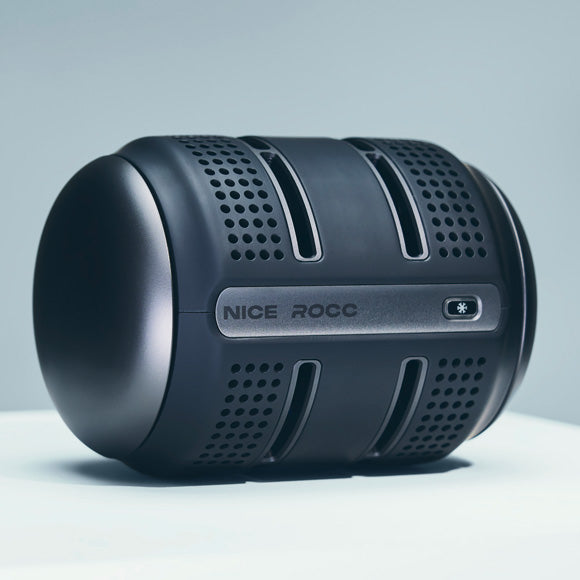
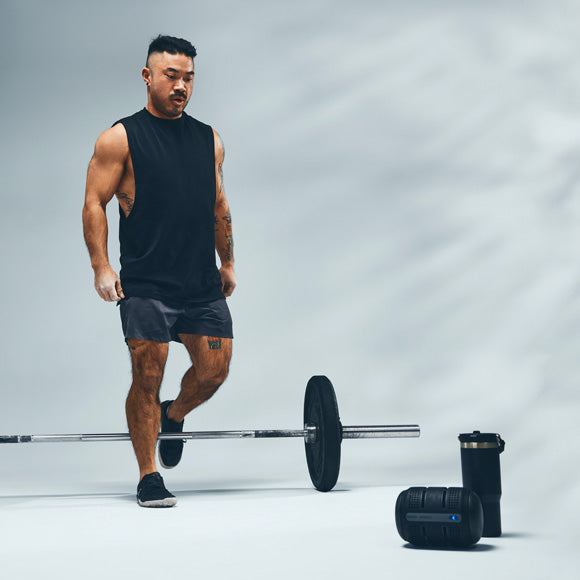
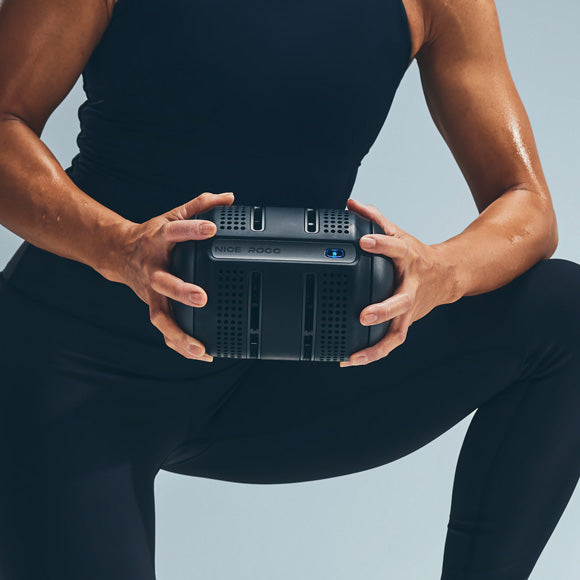
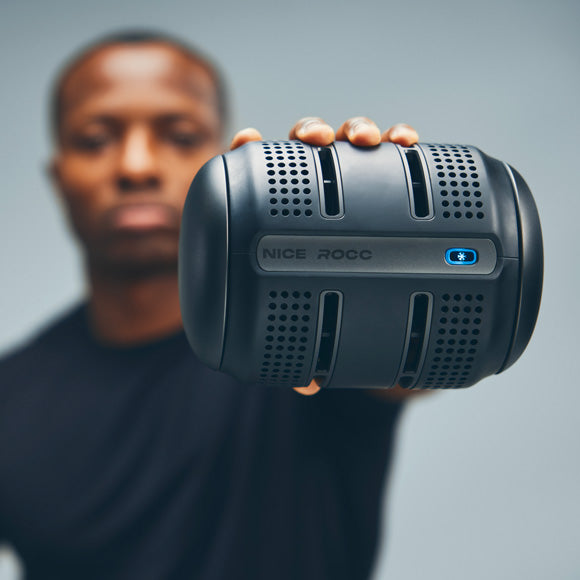
ROCC Palm Cooling
The performance recovery tool trusted by professional athletes.
Learn About the ROCCAuthor: Dr. Ben Cowin, DC, ATC, ICSC, ABAAHP · Clinical Director, NICE Recovery Systems
Between sets, shifts, or innings, it feels like you recover. Your breathing settles. The burn fades. You feel ready to go again.
The Physiological Reality
You are not fully recovered.
You are just less fatigued than you were a minute ago.
That distinction matters. What feels like recovery between efforts is a reduction in acute fatigue — not a return to baseline. The systems that govern performance are still working through a deficit, and the next effort begins before they finish.
What Actually Happens Between Efforts
Multiple systems recover at different rates — and most do not finish before the next bout begins.
After a high-intensity bout, recovery is not a single process running to completion. It is several processes running simultaneously, each on its own timeline, each leaving a different residual deficit when the next effort starts.
Phosphocreatine replenishment
Replenishes quickly but only partially — roughly 70–90% restored within 1–2 minutes. The remaining deficit carries into the next effort from the first rep.
Metabolic stress
H⁺ accumulation, elevated temperature, and accumulated byproducts remain elevated well beyond the rest interval. Full normalization takes far longer than typical between-bout rest allows.
Neural output
Motor unit recruitment and firing rates are already being modulated across repeated efforts. Each subsequent bout is managed by a nervous system that has already begun compensating.
Fatigue does not appear suddenly.
It accumulates across bouts.
Why Heat Is a Hidden Limiter
Thermal load feeds directly into central regulation — and the body resists recovery while it persists.
Each effort increases muscle and blood temperature. This thermal load is not simply a byproduct: it feeds directly into central regulation. Elevated temperature sustains sympathetic activation, the body resists fully transitioning into recovery, and the CNS begins to downregulate output to protect the system. Even during rest, the athlete remains in a partially constrained state.
What elevated thermal load does between efforts
Sustains sympathetic activation, keeping the body in an effort state rather than a recovery state
Resists the autonomic shift toward parasympathetic dominance that meaningful recovery requires
Prompts the CNS to downregulate output across subsequent efforts as a protective mechanism
How Palm Cooling Improves Between-Bout Recovery
Glabrous skin and AVA vascular structures create a direct pathway for rapid heat exchange.
Cooling the palms leverages glabrous skin and specialized vascular structures called AVAs to rapidly exchange heat with the environment. At the same time, cooling activates thermoreceptors whose afferent signals project to thermoregulatory centers in the brain — via brainstem pathways to the hypothalamus — where autonomic output is adjusted.
The combined effect
Faster thermal offload — heat is moved out of the system through a direct vascular pathway, not dissipated gradually through the skin surface
Reduced sympathetic strain — lower core temperature reduces the signal load sustaining sympathetic activation between efforts
Improved autonomic balance — the body moves further toward a genuine recovery state within the same fixed rest interval
This does not fully reset the system. But it improves how much recovery occurs within a fixed rest period — and that marginal improvement, repeated across every bout, is where the performance effect compounds.
Recovery Is Compounding Interest
The benefit is not in any single bout. It adds up across all of them.
The Goal
More effective recovery
per unit of rest.
Not more rest.
The difference between starting the next effort at 80% versus 90% does not just matter once. It adds up across every bout in a session, every session in a week, every week in a season.
The more you recover between bouts, the more you carry into the next one. That is the compounding effect. Small improvements in between-bout recovery produce outsized effects on late-session output and cumulative performance across the training block.
Bottom Line
Fatigue is always carried forward. The question is how much.
Fatigue is always carried forward. The goal is not to eliminate it — it is to slow how fast it accumulates. Every incremental improvement in between-bout recovery changes the slope of that curve. Palm cooling, applied consistently across a session, addresses the thermal component of that equation through a mechanism that ice, towels, and passive rest cannot access with the same speed or precision.
ROCC Palm Cooling
Designed for between-bout recovery. Used by professional athletes across the NFL, NBA, MLB, and international sport.
Learn About the ROCCThis article reflects the clinical perspective of NICE Recovery Systems and is intended for informational purposes. Content is based on published exercise physiology and thermoregulation research. Individual responses to recovery interventions vary.